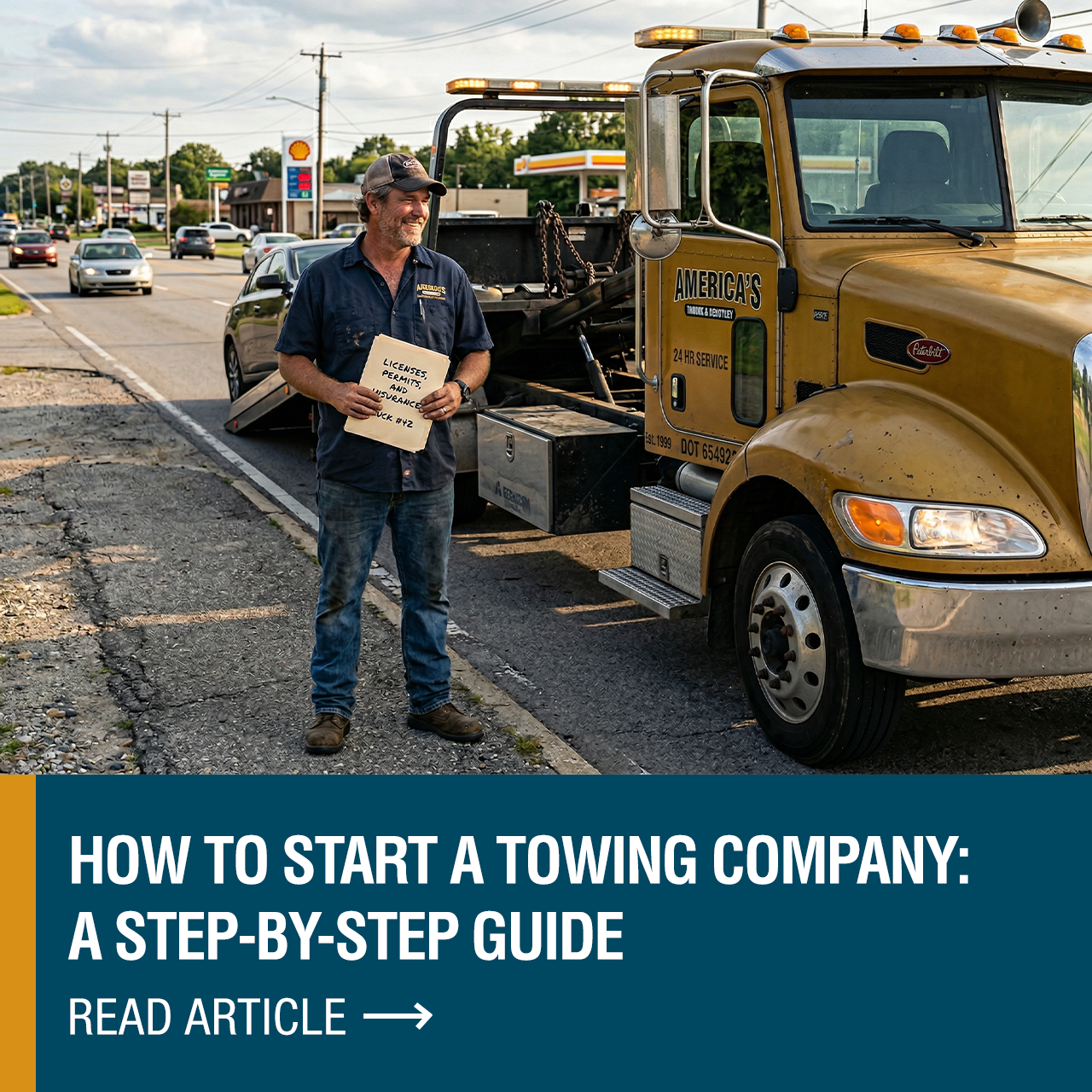
Many hardworking people want more financial stability and room to grow. The towing industry is one strong option. It is a reliable market, and it keeps growing.
So what steps should you take to start a towing company?
Demand for towing in the United States supports an industry worth about $12 billion in 2026, according to IBISWorld.
More vehicles are on the road, and roadside emergencies come with them.
Towing offers strong income potential. It is also built to last, since cars are not going away any time soon.
Towing companies also help their communities. They aid local drivers during stressful moments.
Still, success takes careful planning. You will need a large upfront investment. You will need to follow safety rules. And you will need to focus on reliable service for your local market.
In this article...
- Conduct Market Research
- Develop a Comprehensive Business Plan
- Obtain Licenses, Permits, and Insurance
- Purchase Equipment and Vehicles
- Get On The Road Faster with Tow Truck Financing
- Hire and Train Staff
- Set Up Your Operations
- Market Your Towing Company
- Focus on Customer Service and Growth
Step 1: Conduct Market Research
Do your research before you invest time and money.
About 70,000 tow companies operate in the United States. They serve millions of people each year. Competition is high, but that also shows steady demand.
Start by evaluating local market conditions
Drive through the area you plan to serve. Note who your competitors are, what services they offer, and how fast they respond.
Talk directly with:
- Local repair shops
- Insurance agencies
- Police departments
These talks can show you gaps in service and problems with current providers.
Next, define your target customer segments
Your customers will likely include:
| Customer segment |
What they need |
| Drivers |
Emergency towing |
| Commercial fleets |
Routine or scheduled towing |
| Cities and towns |
Help with traffic incidents |
| Auto dealerships |
Moving vehicles |
Each group wants different service levels, prices, and response times.
Finally, decide which services you'll offer initially
Emergency towing is the base for most companies.
Roadside assistance is also worth adding. IBISWorld's 2025 report expects driver-assistance technology to reduce accident tow calls. Roadside work can help keep your trucks busy.
Other options include heavy-duty towing, motorcycle towing, and electric vehicle (EV) towing. You could also offer luxury or exotic vehicle transport.
Step 2: Develop a Comprehensive Business Plan
Your business plan does two jobs.
- It is a roadmap for daily work. It is also a tool for getting tow truck financing.
- it sets goals you can measure. It also shows where you want to be in the long run.
These goals will guide your choices and keep your company on track as it grows.
Financial projections are critical
Most towing companies earn $200,000 to $500,000 a year. The amount depends on location, fleet size, and services. Plan for seasonal swings, too. Winter often brings more calls because of bad weather.
Your legal structure matters just as much. Many towing companies set up as a Limited Liability Company (LLC). An LLC gives you liability protection and tax flexibility.
Still, talk to both an attorney and an accountant. They can help you pick the best structure for your situation.
Step 3: Obtain Licenses, Permits, and Insurance
Towing rules differ by state, and you must follow them.
Some states require special licenses on top of a commercial driver's license (CDL).
Check with your state's transportation agency. It can confirm all local rules. These may include business licenses, vehicle registration, and permits for some roads or hours.
Insurance is your largest ongoing expense in towing. It is also the most important. Annual insurance costs per truck usually run from $2,000 to $15,000. The price depends on coverage, driver history, and company size.
Most companies need these policies:
| Policy |
What it covers |
| General liability |
Injuries and property damage to people who are not your employees |
| Commercial auto insurance |
Your tow trucks, plus injuries and damage your drivers cause to others |
| Garage keeper's liability |
Customer vehicles while they are in your lot or yard |
| On-hook coverage |
Customer vehicles while you tow them |
| Workers' compensation |
Medical bills and lost wages if an employee is hurt on the job |
Work with an insurance broker who knows towing. A good broker will make sure you have the right coverage without paying for policies that overlap.
Step 4: Purchase Equipment and Vehicles
The equipment you pick affects your startup costs and how much work you can take on.
New rollback and wheel-lift tow trucks often cost $95,000 to $160,000. Good used trucks can cut your upfront costs a lot.
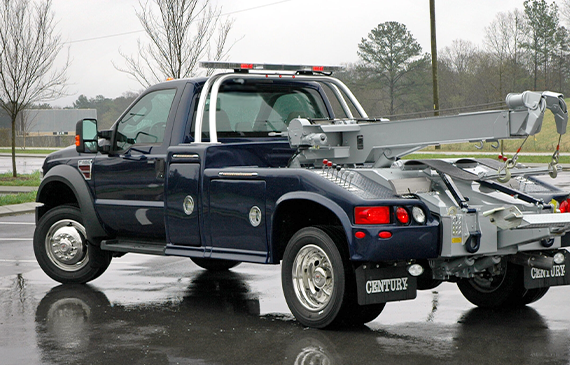
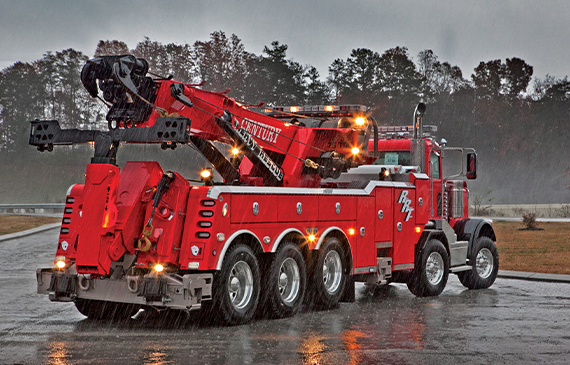
Pick trucks that fit your service area. In cities, smaller trucks are easier to move around. On highways or in rural areas, you may need heavy-duty trucks. They can go long distances and recover large vehicles.
You will also need other key equipment:
- Safety gear (reflective vests, cones, flares)
- Hand tools
- Communication devices
- GPS and dispath technology
Well-kept, professional equipment makes your work safer. It also builds customer trust.
Establish a routine inspection and maintenance schedule from day one
A truck that sits idle costs you money. Regular care helps you meet the rules and lowers repair costs over time.
Step 5: Get on the Road Faster with Tow Truck Financing
The high price of a tow truck is one of the biggest hurdles for new towing businesses.
A new rollback or wheel-lift truck often costs $95,000 to $160,000. For many startups, paying that in cash is not realistic.
Spending too much cash up front can also strain your working capital. Then it is harder to pay for insurance, fuel, staff, and daily costs.
Understanding Tow Truck Financing
Tow truck financing helps new and growing companies get trucks and keep cash on hand. You may be able to finance new or used trucks. Payments are usually the same amount each month.
CALCUATE YOUR TRUCK'S LOW MONTHLY PAYMENT
For startups, financing shortens the gap between planning and opening for business. You do not have to wait and save before you launch. You can start earning sooner, and you keep money free for other startup needs.
Case Study: How Financing Supported a Start-up Tow Truck Business
A start-up towing business started in 2025. The owner wanted to open but did not have enough cash to buy a tow truck outright.
The owner had industry experience and a clear plan for service. But the owner did not want to drain cash reserves before opening day. So the company chose to finance a used 2019 rollback tow truck.
Financing lets the business:
| Benefit |
What it meant for the business |
| Fast start |
Begin work without delay |
| Cash on hand |
Save cash for insurance, licensing, and marketing |
| Early customers |
Take service calls right away and build local relationships |
In its first year, the business built steady call volume. Roadside assistance and referral partnerships drove it. Revenue from the first truck covered operating costs. It also gave the owner time to work on faster response times and better customer service.
Why Financing Is a Practical Strategy for New Towing Companies
For many towing startups, financing is less about cost and more about flexibility.
It helps businesses:
| Area |
How financing helps |
| Working capital |
Keep working capital during the early days |
| Payments |
Match truck payments to the money the truck earns |
| Fleet size |
Add trucks as demand grows |
| Timing |
Avoid slowing growth because of big upfront costs |
When you treat a tow truck as an asset that earns money, not a one-time purchase, financing can support steady growth.
GET STARTED WITH TOW TRUCK FINANCING
Step 6: Hire and Train Staff
Hiring skilled drivers is one of the industry's biggest challenges.
The wider trucking industry has driver shortages. The work is hard, and the workforce is aging.
Look for experience and clean driving records. Do not pick drivers based on low pay. Experienced drivers lower your risk. They handle tough situations better, and they give customers better service.
Train your team in:
- Safety steps
- How to use your equipment
- Customer service standards
Even experienced drivers benefit from training on your company's way of doing things. Regular refresher training keeps their work steady.
Set clear company rules, such as uniform standards and emergency steps. They reduce confusion. They also make sure every customer sees a professional team.
Step 7: Set Up Your Operations
How you set up your operations affects both efficiency and profit.
Find a storage lot with the right zoning and enough room for your trucks and equipment.
Plan office space for dispatching, billing, and talking with customers.
Use modern dispatch and chat tools. GPS dispatch software improves routes and cuts response times. It also gives you data you can use to do better.
Many systems work with mobile apps, so you can talk with drivers in real time.
Step 8: Market Your Towing Company
Being easy to find online is critical.
BrightLocal's 2026 survey of U.S. consumers found that 73% started their latest local business search on a mobile phone. That makes online marketing a must. Build a professional website that is set up for local search. Make sure your company shows up when people search for towing in your area.
Use search engine optimization (SEO), social media, and local ads to reach your audience. Keep your branding the same on every platform. This builds recognition and trust in your market.
When your marketing works, these partners can open new streams of work:
| Partner |
Opportunity |
| Auto repair shops |
Steady referrals when customers' vehicles need to reach a shop |
| Insurance companies |
Referrals when policyholders need a tow |
| Law enforcement agencies |
Calls from traffic incidents |
| Car dealerships |
Vehicle transport work |
These partners often send steady, repeat business beyond emergency calls.
Step 9: Focus on Customer Service and Growth
Great customer service sets towing companies apart.
Customers are often stressed, stranded, and upset when they call for help. A calm, polite, and professional response leaves a lasting impression. It also brings repeat business.
| Focus |
What to do |
| Staff |
Train your staff to speak clearly, arrive on time, and handle vehicles with care |
| Feedback |
Ask customers for feedback, and use it to improve |
| Reviews |
Online reviews have a big effect on local buying choices, so happy customers drive growth |
Once your business is established, start planning to expand. You might add special services such as motorcycle towing or luxury vehicle transport.
You can also grow by buying other companies.
Is Starting a Towing Company Right for You?
Starting a towing company takes planning, money, and steady effort.
But the industry is stable, and demand continues. That is a real chance for people with drive.
Successful towing companies are built on three core pillars:
- Operational efficiency
- Exceptional customer service
- Sound financial management
Do your local research. Plan your money with care. Hold yourself to professional standards. Then your towing business can stand out, even in a crowded market.
Frequently Asked Questions
Is tow truck financing available for new or start-up businesses?
Yes. Lenders like Beacon Funding finance tow trucks for start-ups and for established companies. You may be able to finance new or used trucks. Payments are usually the same amount each month. Financing can help a new business get equipment and keep working capital for daily costs.
Can you start a towing business with one truck?
Yes. It is one of the most common ways towing businesses get started.
Many first-time owners launch with one tow truck and grow from there. One well-equipped truck lets you start earning right away. You can build ties with local repair shops and insurance providers. You also learn more about demand in your area.
Financing that first truck can help you save cash for insurance, licensing, and daily costs. That gives you room to grow at a comfortable pace.
What makes a towing company successful long term?
We work with towing businesses across the country. In our experience, long-term success comes down to three things:
- Operational efficiency: Reliable equipment, organized dispatching, and minimal downtime
- Exceptional customer service: Professional drivers, fast response times, and clear communcation
- Sound financial management: Controlling costs, managing cash flow, and investing in growth at the right time
At Beacon Funding, we see top towing companies treat equipment as an asset that earns money. That lets them upgrade or add trucks without losing momentum. It sets them up for steady growth.