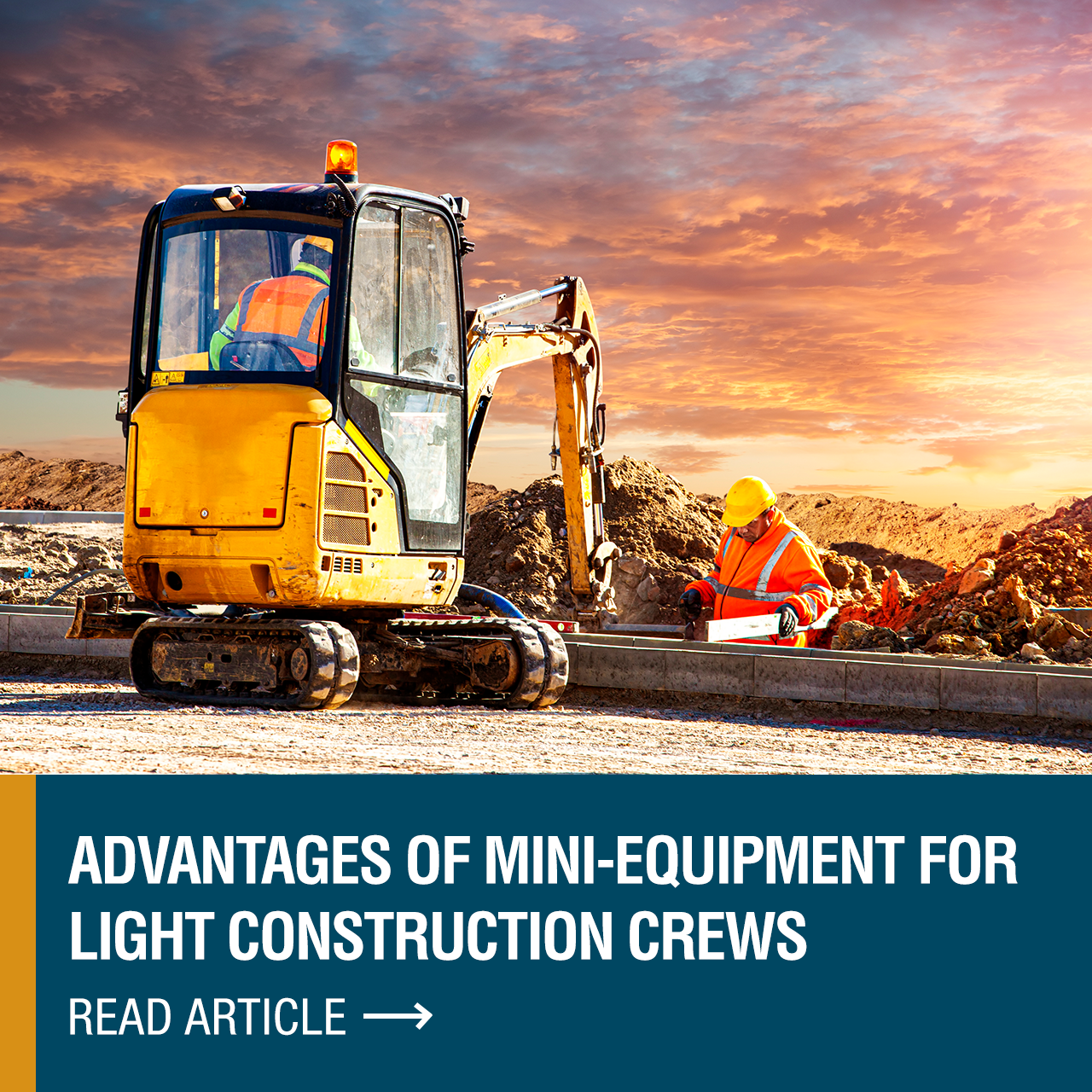
Mini-equipment: Think compact loaders, skid steers, mini-excavators, and mini wheel loaders. They help small light-construction crews (often owner-operated or growing residential remodel businesses) finish jobs faster, reduce manual labor, and take on more work without adding headcount.
The biggest win isn’t “more power.” It’s time, access, and throughput: getting through gates, working in tight backyards, moving material in fewer trips, and completing more billable work per week.
This article explains where mini-equipment pays off most on residential jobs, how to think about ROI (manual labor vs. machine), and how equipment financing can help you get the force-multiplier without draining working capital.
In this article, we’ll explain…
- Who This Article Is For
- What Counts as “Mini-Equipment” in Light Construction
- Why Mini-Equipment is a Force Multiplier for 2 – 3 Person Crews
- Residential Jobs Are Won on Access and Maneuverability
- Manual Labor vs. Mini-Equipment: The ROI Way to Think About It
- Which Mini-Equipment Types are Best for Residential Work
- How Financing Helps Small Crews Get The Upside Without Draining Cash
- Practical “First Machine” Checklist for Light Construction Crews
- Next Step: Consider Pre-Approval and Compare Options
- Frequently Asked Questions
Who this article is for
If you’d call yourself a small contractor, a home improvement business, or a residential remodel startup, this is for you.
If you’re an established crew offering general contracting services or renovation and remodeling and you’re trying to boost margin without scaling payroll, it’s also for you.
The common pain point is simple:
- You don’t want to burn cash on a big purchase.
- You also don’t want a “few-hour” job to eat an entire day because everything is being done by hand.
Mini-equipment is how small crews stop losing time to the shovel, wheelbarrow, and “one more trip.”
If you’re exploring options, start with a quick pre-approval so you know your budget range before you shop.
SEE YOUR PRE-APPROVAL
What counts as “mini-equipment” in light construction
Think of mini-equipment as compact, jobsite-friendly machines that do the moving, digging, lifting, and hauling that usually eats your crew’s time.
Common examples (and the target keywords you’ll see when you shop):
The real value isn’t the spec sheet, it’s the faster cycles, easier access, and repeatable results on every job.
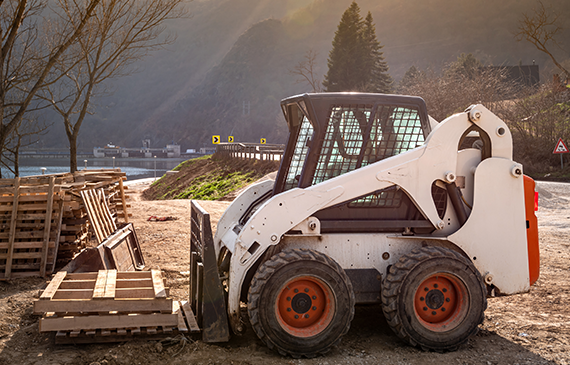
Why mini-equipment is a force multiplier for 2 – 3 person crews
A small crew has a hard ceiling: there are only so many hours and so many backs.
Mini-equipment raises that ceiling by changing the “unit economics” of a job:
1. You compress time on the unbillable parts
Every residential job has work that could consume half the day:
- Hauling debris
- Moving base material
- Staging pavers / block / materials
- Loading dumpsters/ trailers
- Rough grading and backfill
A mini machine turns it into quick and easy work.
2. You reduce fatigue, which protects quality
Manual work has a hidden cost. End-of-day fatigue leads to:
- Sloppier finish work
- Slower cleanup
- Higher risk of mistakes and rework
A mini machine preserves energy for the skills that customers appreciate.
3. You unlock “yes” jobs you’d otherwise avoid
Tight access, short timeline, heavy materials: these are the exact jobs small crews tend to decline because they become labor traps.
With the right compact machine, the job becomes doable without hiring more laborers.
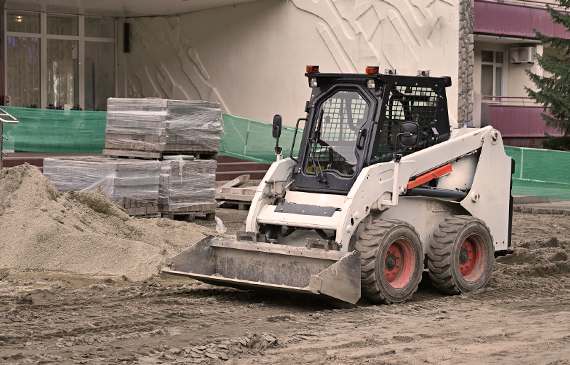
Residential jobs are won on access and maneuverability
On residential sites, space is often a constraint:
- Narrow gates
- Tight side yards
- Soft lawns and uneven ground
- Limited staging area
- Neighbors, fences, and tight turnarounds
Mini-equipment shines because it’s built to move and work in tight workplaces.
Where it shows up in real life:
- Getting through a gate and reaching the backyard instead of hand-carrying everything.
- Turning around in a small driveway without constant repositioning.
- Working close to structures with better control and less chaos.
This is the “small jobsite advantage.” On residential sites, the advantage is staying quick, controlled, and low-impact.
Manual labor vs. mini-equipment: The ROI way to think about it
Here’s the cleanest way to evaluate ROI without obsessing over machine specs:
Definition: Force-multiplier ROI
Force-multiplier ROI is when a machine lets the same crew complete more billable work per week, without increasing payroll.
Use these three comparisons:
1. Time savings per job
Ask: Which steps would stop being manual?
Examples:
- Moving base material
- Hauling spoils
- Loading debris
- Digging and backfill
- Rough grading
If mini-equipment saves even 2 hours per job, you can often fit in:
- An extra small project per week, or
- The same projects with less overtime, or
- More time spent selling and scheduling the next work.
2. Labor replacement (without layoffs)
It’s one thing to “replace people.” It’s another to “stop needing one extra person to make a job feasible.”
If a task usually requires:
- 3 people + wheelbarrows + time
And the machine turns into:
- 2 people + machine cycles
…you just improved the job’s margin.
3. Opportunity cost of waiting
Waiting to “save up” for equipment can cost more than financing because the machine isn’t producing revenue yet.
This is the same growth logic Beacon Funding uses in its financing education: If you’re willing to explore your options, equipment can earn while you pay over time, instead of sitting on the sidelines while you save.
Which mini-equipment types are best for residential work
You’ll pick based on what eats time in your typical jobs.
Best for: material handling, loading/unloading, tight access, quick cycles.
Why crews like them: they’re efficient “jobsite runners” that reduce wheelbarrow time and speed up cleanup.
Best for: Versatility with attachments and fast material movement on jobs with enough room to maneuver.
Why they win: They do a lot of different tasks well, especially when you’re switching between moving, grading, and lifting.
Best for: Digging, trenching, light demo, and precise work in tight areas.
Why they win: Precision + reach + control without needing full-size equipment.
Best for: Efficient loading and carrying, especially when you’re moving material repeatedly.
Why they win: Smooth handling and strong productivity on repetitive material workflows.
Rule of thumb:
If your jobs are “move-heavy,” start with loaders.
If your jobs are “dig-heavy,” start with a mini excavator.
If you do both, prioritize the machine that eliminates your biggest bottleneck first.
How financing helps small crews get the upside without draining cash
Light construction businesses often run on tight budgets:
- Payroll
- Materials
- Marketing
- Repairs and surprises
Dropping a large lump sum into equipment can squeeze working capital, and that’s where financing is useful.
Equipment financing’s main benefit is keeping your business liquid: Keep cash available so you can keep the business moving and say yes to opportunity.
Financing can be especially helpful if you want to:
- Keep a cushion for surprise expenses
- Avoid delaying jobs while you “save up”
- Add capacity without adding headcount
- Structure payments to match cash flow (rather than one big hit)
And it doesn’t have to be all-or-nothing. Many contractors use down payments to reduce the amount financed while still protecting cash reserves – all it takes is a quick and easy application.
APPLY FOR FINANCING NOW
Practical “first machine” checklist for light construction crews
Before you buy anything, answer these:
1. What’s the most common bottleneck on my jobs?
Hauling, digging, grading, demo, staging materials?
2. What access constraints do I face weekly?
Gates, backyards, driveways, tight turns?
3. Which tasks cause the most fatigue and slowdowns?
End-of-day cleanup and hauling is a big one.
4. What would I do with 2 extra hours per job?
Add a job, finish earlier, reduce overtime, sell more work?
5. What’s my cash cushion… and what can’t I afford to disrupt?
(Payroll and materials usually come first.)
Once those are clear, you can shop smarter and finance smarter.
Next step: Consider pre-approval and compare options
If you’re early in the buying process, a pre-approval can help you understand what payment ranges are realistic before you shop, without committing to a machine on day one.
START YOUR PRE-APPROVAL
Beacon Funding is a leading lender for light construction equipment financing. With a straightforward process, small businesses can work with Beacon Funding to finance equipment with a variety of structures (financing, lease-to-own, flexible terms).
Frequently Asked Questions
1. Is mini-equipment worth it for a 2 – 3 person light construction crew?
Often, yes, because the ROI comes from time saved and jobs completed, not from owning “bigger iron.”
Start by identifying the one task that consistently eats hours (hauling, digging, staging materials). Learn how equipment financing can help you add capacity without draining cash on day one.
2. What mini-equipment is best for tight residential spaces?
Many residential crews start with compact loaders or a mini excavator because access and maneuverability matter more than raw power.
The best choice depends on whether your work is move-heavy or dig-heavy. If you’re shopping, review Beacon Funding’s equipment financing programs to match terms to your budget.
3. Should I pay cash or finance mini-equipment?
Paying cash can be fine if you have a strong cushion. But financing can preserve liquidity: cash you may need for payroll, materials, and surprises, while the machine is out earning.
4. What do I need to qualify for equipment financing through Beacon Funding?
Most reviews look at basic business info, equipment details (quote/listing), and credit/time-in-business factors that vary by situation, the application process and help structure terms that fit your cash flow.